Penn 720 Overview
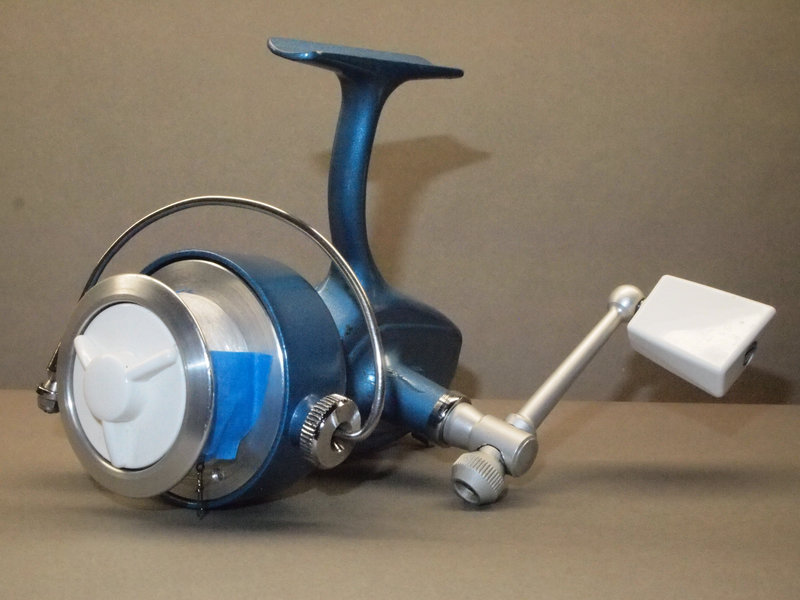
The Penn 720 is a light to medium duty open-face full-bail spinning reel, part of Penn's 700 Spinfisher series, which ranged from the smallest--the 720, mostly intended for freshwater fishing--to the largest, the mighty 704, designed for heavy saltwater duty. The line capacities, materials, and overall heft of the reels in the 700 series varied widely.
The 720 was introduced in 1968 and Penn ended production in 1978. These early 700-series reels were finished in either blue or green (affectionately known as "greenies"). Which color was used on which model seems to have been a bit random in earlier years of production, but later appears to have become more consistent--the models with bushings (720, 710, 712, and 704) were blue, and the models with bearings (722, 711, 713, and 705) were green--but in any case it doesn't seem to be a reliable way to date individual reels.
In 1978 the model number was changed to 720Z with the introduction of the Z-series of reels, and this reel stayed in production until 1995. Like the earlier Spinfisher series, the Z-series included a range of models for different field conditions, and updated the original 700-series with a black finish, stainless steel components, and a few internal refinements, but kept the same basic design and gear ratios.
Some later versions added sealed drag knobs and upgraded the line rollers and bearings, especially the 704Z and 706Zs, which were intended for use in harsh surf-fishing conditions.
The 720's housing and rotor cup are made of steel, as is the main gear; the rest of the gears are mostly brass. The crosswind block and drag cap are made of white plastic. The spool is made of aluminum.
Watch on YouTube: Penn 720 - Overview

These reels are very simple, strong, dependable designs, and many are still in use today. This overview provides background on similar models, badges and finishes, features and controls, specifications, and how to integrate the Penn 720 into a balanced tackle outfit, putting the reel into the context of what rods, lines, and lure weights it is designed for. Finally there is a list of references to point the way to other resources and further reading. For more complete background on the very wide range of reels in the Spinfisher series, see Penn's 700 Spinfisher series.
The Penn 720 Service Guide shows you how to disassemble, clean, lubricate, and reassemble the Penn 720 Spinfisher.
Similar Models
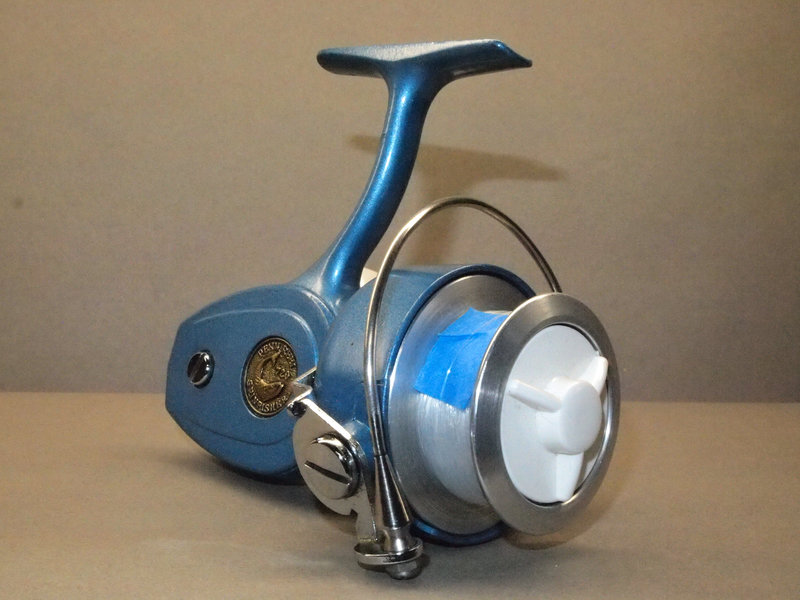
The Penn 722 (not pictured) is basically the same reel with a few minor upgrades, the most important mechanical difference being that the 722 uses a ball bearing on the main shaft --the 720 uses a brass bushing. The practical implication is that the 722 has a bit smoother cranking action. In terms of appearance, the 722 is finished in light green (known to enthusiasts as a "greenie")-- the 720 is finished in a light metallic blue.
Otherwise the reels are mechanically almost identical, and the practical implication of this is that most parts are interchangeable. If you need a replacement part for a 720, then you could locate and use either a 720 or a 722 for most internal parts. You could even mix and match exterior parts like the housing, housing plate, and rotor cup.
The small strips of painter's tape holding the line in place on the spool maintain tension on the spooled line when the reel is not in use. Painter's tape has many qualities that are useful for work on vintage reels--it sticks well to metal and plastic surfaces and yet is easily removed, and it does not leave sticky residue. It is also available in many widths for different applications.
Badges and Finishes
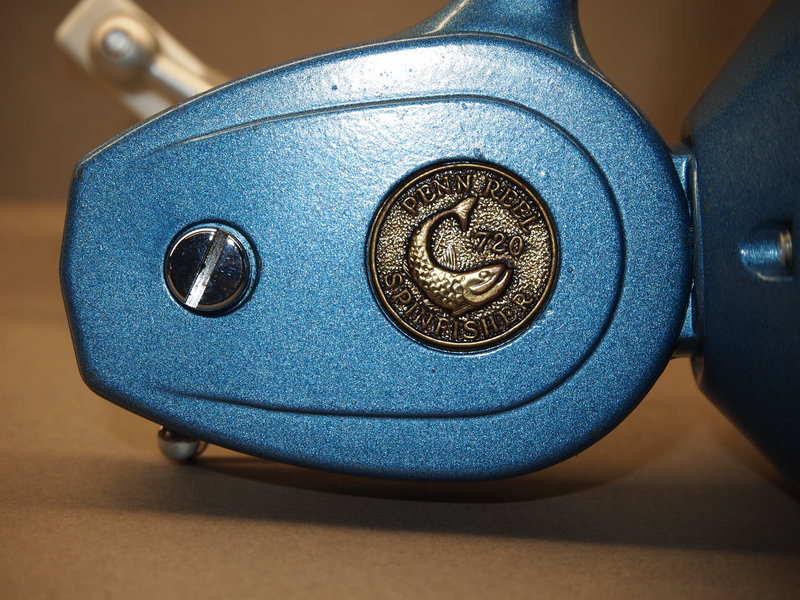
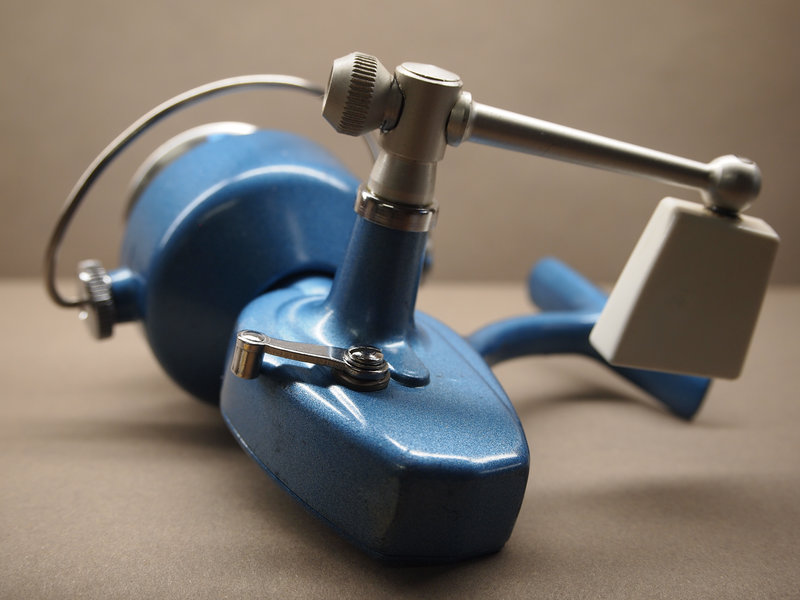
This varies depending on the year of production. The example reel here has the earlier badge design. Later reels changed to a more text-oriented design. This also shows the remarkable condition of the original light blue metallic finish, which (in 2026) is around 75 years old!
Features and Controls
The 720 is a very simple design with a few interesting exterior features.
The white plastic drag cap on the front of the spool is simply twisted to apply more drag or to back off the drag.
The eccentric lever has two positions; in one the anti-reverse and clicker are engaged, in the other the retrieve is silent. In this location, directly below the handle, it is easily engaged when a fish strikes to prevent the handle from revolving backwards.
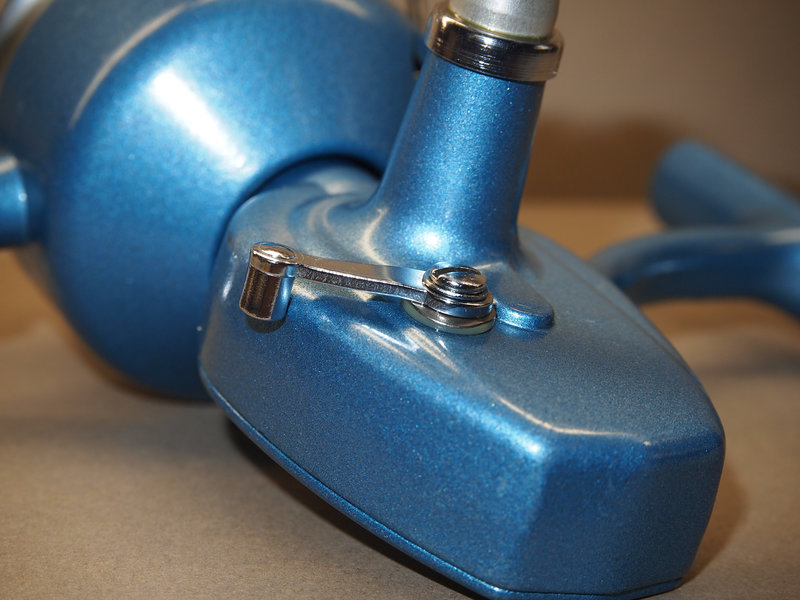
The handle can be rotated for storage by loosening the nut at the base.
Specifications
Weight: 9 1/2 oz.
Gear ratio: 4:1
Line Capacity
| Line lb. test | yds. |
|---|---|
| 4 | 300 |
| 6 | 200 |
| 8 | 150 |
| 10 | 125 |
| 12 | 100 |
Balanced Tackle Outfits
These specifications are for both the Penn 720 and 722 and are from the reel's instruction manual.
| Rod | Line lb. test | Lures oz. |
|---|---|---|
| 5'6" light action | 2 - 6 | 1/8 - 1/2 |
| 6' light action | 4 - 8 | 1/4 - 1/2 |
| 6'6" light action | 4 - 8 | 1/4 - 1/2 |
| 7' light action | 4 - 10 | 1/4 - 1/2 |
Shakespeare's more general recommendations for spinning tackle are slightly different:
| Rod | Line lb. test | Lures oz. |
|---|---|---|
| 6'6" - 7' extra light, light | 2 - 6 | 1/8 - 3/8 |
| 6'6" - 7' light | 4 - 8 | 1/4 - 1/2 |
| 6'6" - 7' medium | 6 - 10 | 3/8 - 3/4 |
| 7' - 8'6" saltwater class | 10 - 15 | 1/2 - 1 |
Comparing these two sources, it's reasonable to assume that the manufacturer's box insert for that specific reel is more exactly correct for the 720 / 722. Another consideration here is that Penn probably - and rightly - considered other, heavier reels in the Spinfisher series to be more appropriate for heavier use.
On the other hand, Shakespeare's recommendations suggest that this reel could be suitable for targeting larger species although the last category (saltwater class) seems to be at the outer limits of what make sense for this reel.
References
- Penn Fishing Tackle Mfg. Co. Instruction Manual Spinfisher 720, et al
- Shakespeare, Secrets of Successful Fishing (1962)
For full source details, see References